
Dog Screen Door Installation Guide: Step-by-Step Instructions
Introduction to Dog Screen Doors
A dog screen door is a convenient and practical solution for pet owners who want to give their furry friends the freedom to move between indoor and outdoor spaces without leaving the main door open. This installation guide will walk you through everything you need to know to choose, install, and maintain a dog screen door for your home.
What is a Dog Screen Door?
A dog screen door is a small, usually self-closing, door that is integrated into your existing screen door. It allows your dog to pass through easily while keeping insects out and maintaining ventilation.
Benefits of Installing a Dog Screen Door
- Convenience: Lets your dog come and go as they please.
- Energy Efficiency: Reduces the need to constantly open and close doors, keeping indoor temperatures stable.
- Security: Maintains a barrier against bugs and pests.
- Peace of Mind: Offers your pet independence while keeping your home secure.
Choosing the Right Dog Screen Door
Selecting the best dog screen door depends on your specific needs and your pet’s size and habits.
Types of Dog Screen Doors
- Magnetic Flap Doors: Use magnets to close automatically after your dog passes through.
- Sliding Screen Doors: Designed specifically for sliding patio doors.
- Lockable Panel Doors: Include locks for added security.
Type
Best For
Special Features
Magnetic Flap
Most standard screen doors
Self-closing
Sliding Screen Insert
Sliding patio screen doors
Easy installation
Lockable Panel
Security-conscious households
Can be locked
Factors to Consider Before Purchase
- Dog Size: Make sure the opening matches your dog’s height and width.
- Screen Door Material: Check compatibility with metal, fiberglass, or vinyl screens.
- Weatherproofing: Choose a model with durable, weather-resistant materials.
- Ease of Installation: Some models are more DIY-friendly than others.
Preparing for Installation
Proper preparation ensures an easy and successful installation process.
Tools and Materials Needed
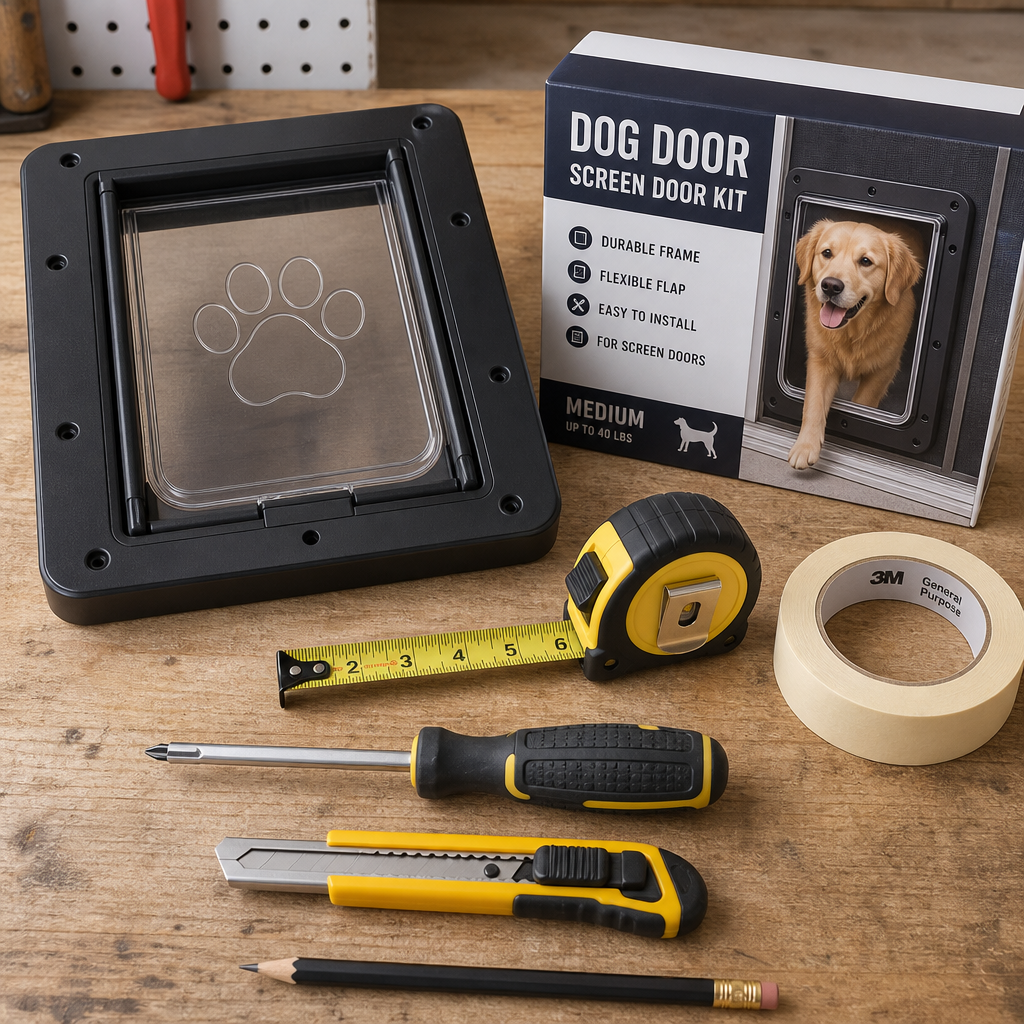
- Dog screen door kit
- Measuring tape
- Marker or pencil
- Screwdriver or drill
- Utility knife or scissors
- Masking tape
Measuring Your Screen Door and Dog
- Measure Your Dog: Measure your dog’s width at the widest point and height from the ground to the top of their shoulders.
- Measure the Screen Door: Choose a location low enough for your dog to step through comfortably.
- Check for Obstructions: Make sure the chosen spot is free from latches and handles.
Step-by-Step Dog Screen Door Installation
Follow these steps to install your dog screen door correctly.
Marking the Installation Spot
- Mark the desired location on the screen door using a marker and masking tape as a guide.
- Double-check measurements to ensure the door will be at the right height for your dog.
Cutting the Screen
- Remove the screen door from its frame if possible.
- Place the template (usually included with the kit) on the marked area.
- Carefully cut along the lines using a utility knife or scissors.
Attaching the Dog Screen Door Frame
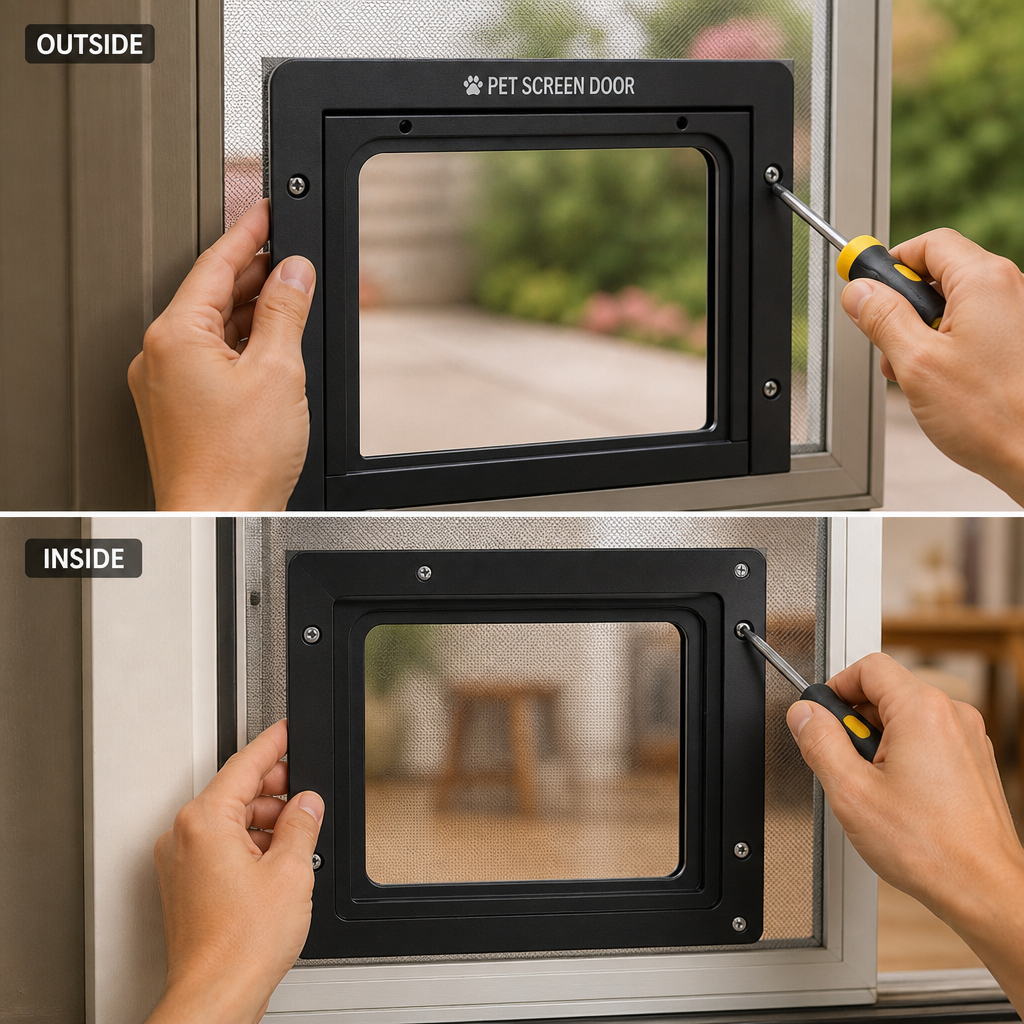
- Fit the interior and exterior frames of the dog door into the cutout.
- Use the provided screws or clips to secure the frames together, sandwiching the screen material.
Securing and Testing the Door
- Ensure the flap swings freely and closes securely.
- Test the door by gently pushing it open and closed several times.
- Reinstall the screen door in its frame if it was removed.
Common Installation Challenges and Solutions
Even with careful planning, you may encounter some challenges.
Dealing with Different Screen Materials
- Metal Screens: May require additional reinforcement for stability.
- Fiberglass Screens: Easy to cut but may fray; use a sharp blade.
- Vinyl Screens: Flexible but can stretch; handle gently.
Ensuring a Secure Fit
- Tighten all screws but avoid over-tightening, which could damage the screen.
- Use foam weather-stripping if there are small gaps around the frame.
Weatherproofing and Durability Tips
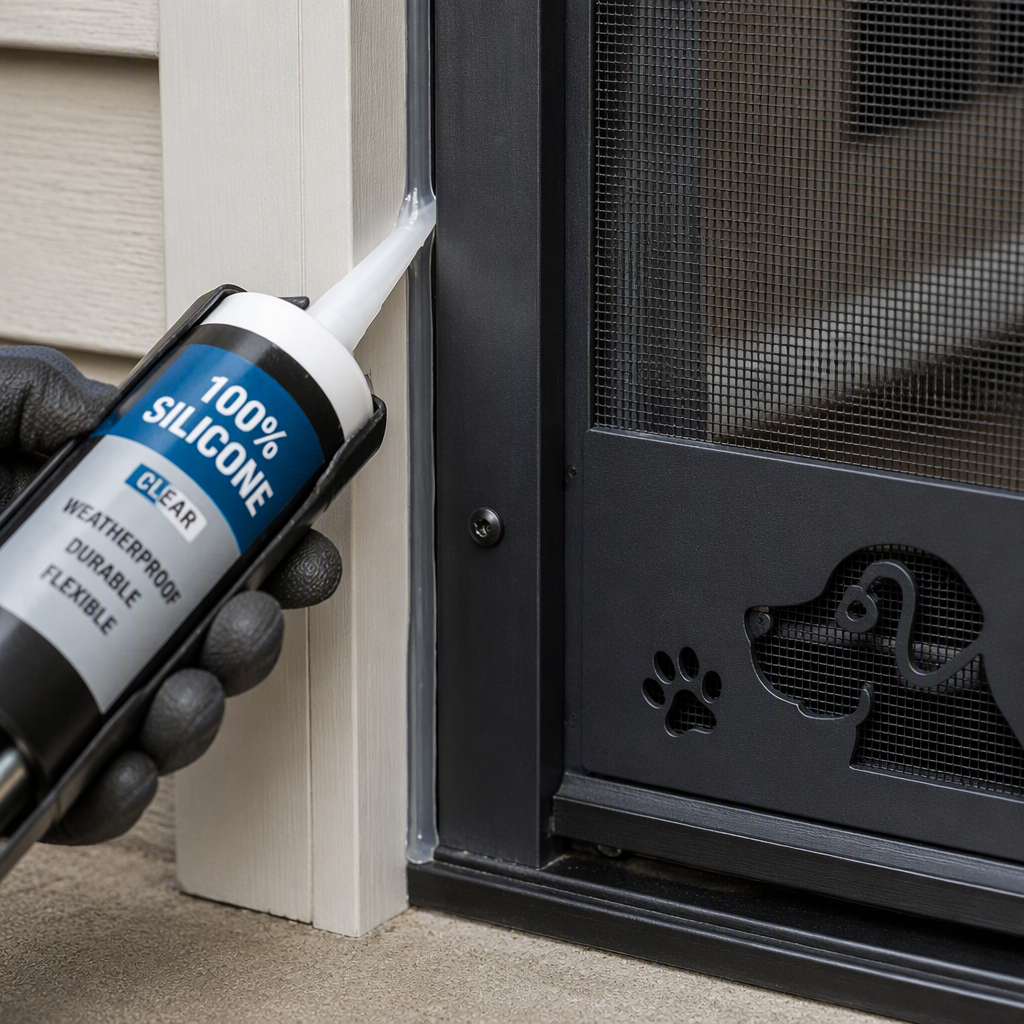
- Apply a bead of silicone around the frame for extra weather resistance.
- Choose UV-resistant materials for longer lifespan.
Maintenance and Safety Tips
Keeping your dog screen door in top condition ensures continued convenience and security.
Routine Maintenance
- Regularly check for loose screws or damaged flaps.
- Clean the door and surrounding screen with mild soap and water.
Training Your Dog to Use the Door
- Prop the flap open at first and encourage your dog with treats.
- Practice until your dog is comfortable pushing through on their own.
- Never force your dog through the door.
Frequently Asked Questions About Dog Screen Doors
Q: Can I install a dog screen door on any type of screen door?
A: Most dog screen doors are compatible with standard screen doors, but always check compatibility with your specific door.
Q: Are dog screen doors secure?
A: Many models include locking mechanisms to prevent unwanted access.
Q: How do I prevent bugs from getting in?
A: Choose a door with a tight-fitting magnetic flap and weatherproof seals.
Conclusion
Installing a dog screen door is a straightforward DIY project that enhances your pet’s independence and your home’s convenience. By following this step-by-step guide, you can select the right door, install it confidently, and keep it working smoothly for years to come.