
How to Choose and Install the Best Pet Screen Door for Your Home
Fresh air makes any home feel brighter and healthier, but pet owners often face a difficult dilemma: open the door and risk an escape, or keep it shut and trap stuffy air inside. Standard insect screens are no match for sharp claws, jumping paws, or curious noses.
Investing in a dedicated pet screen door solves this issue, giving your household reliable ventilation while keeping your furry friends secure indoors.
What Is a Pet Screen Door and Why Do Pet Parents Need One?
A pet screen door is an reinforced barrier installed over exterior or interior doorways. Unlike traditional window or patio screens that tear under slight pressure, these specialized products use puncture-resistant materials engineered to withstand scratching, climbing, and running impacts.
Standard Mesh vs. Heavy-Duty Scratch-Resistant Mesh
To understand why a dedicated pet screen is essential, consider how standard materials compare to claw-proof alternatives:
Feature
Standard Fiberglass Mesh
Heavy-Duty Pet Screen Mesh
Material
Lightweight fiberglass or thin aluminum
Vinyl-coated polyester or nano-tech fiber
Tear Resistance
Low; frays or punctures easily with claws
High; resists tears from cats and medium-to-large dogs
Visibility & Airflow
Excellent visibility; maximum airflow
Good visibility; optimized airflow with superior tensile strength
Durability Span
1–2 seasons with pets
Several years of active pet use
Key Benefits: Airflow, Pet Containment, and Pest Prevention
- Continuous Ventilation: Cool down rooms naturally during spring and summer without running up air conditioning costs.
- Reliable Containment: Prevent indoor cats from slipping outside or keep dogs out of specific rooms (such as nurseries or home offices).
- Pest Control: Keep flies, mosquitoes, and outdoor pests outside where they belong while leaving the main door open.
Essential Features of a High-Quality Pet Screen Door
Not all reinforced screens offer the same level of protection. Look for these essential build specifications before purchasing.
Thick, Vinyl-Coated or Nano-Mesh Durability
The core material should be constructed from vinyl-coated polyester yarn or dense nano-composite mesh. These fibers flex under claw pressure rather than snapping, preventing runs, snags, and holes.
Secure Fasteners: Heavy-Duty Zippers vs. Magnetic Closures
- Double-Sided Zippers: Best for high-energy pets or agile climbers like cats. Zippers physically lock the opening shut so pets cannot push through.
- Magnetic Closures: Ideal for hands-free human passage. However, ensure magnets run the entire vertical length with strong internal weights so drafts or persistent pets cannot nudge them open.
Damage-Free Hook and Loop Frame Attachment
For renters and homeowners alike, full-frame adhesive hook-and-loop tape (such as industrial Velcro) allows secure mounting directly onto the door frame without drilling holes or damaging woodwork.
Types of Pet Screen Doors on the Market
Choosing the right style depends on your doorway layout and your pet's behavioral habits.
Zippered Pet Mesh Screens (Ideal for Cats and Small Dogs)
Zippered screens attach flush against standard interior or exterior door frames. They feature curved or straight dual-sided zippers. Because the zipper stays firmly closed at your desired height, pets cannot push the edges open, making this style the gold standard for cat containment.
Magnetic Walk-Through Screen Doors
Magnetic curtains part down the center and snap back together automatically. They are great for patio doors where family members frequently walk in and out. While convenient, determined pets can push through them, making them better suited for gentle dogs rather than determined escape artists.
Rigid Sliding Screen Doors with Built-In Flaps
These are metal-framed replacement panels designed for sliding glass patio setups. They feature heavy-duty screening along with an integrated pet flap at the bottom, allowing your pet to enter and exit an enclosed patio or fenced yard freely.
How to Measure Your Doorway for the Perfect Fit
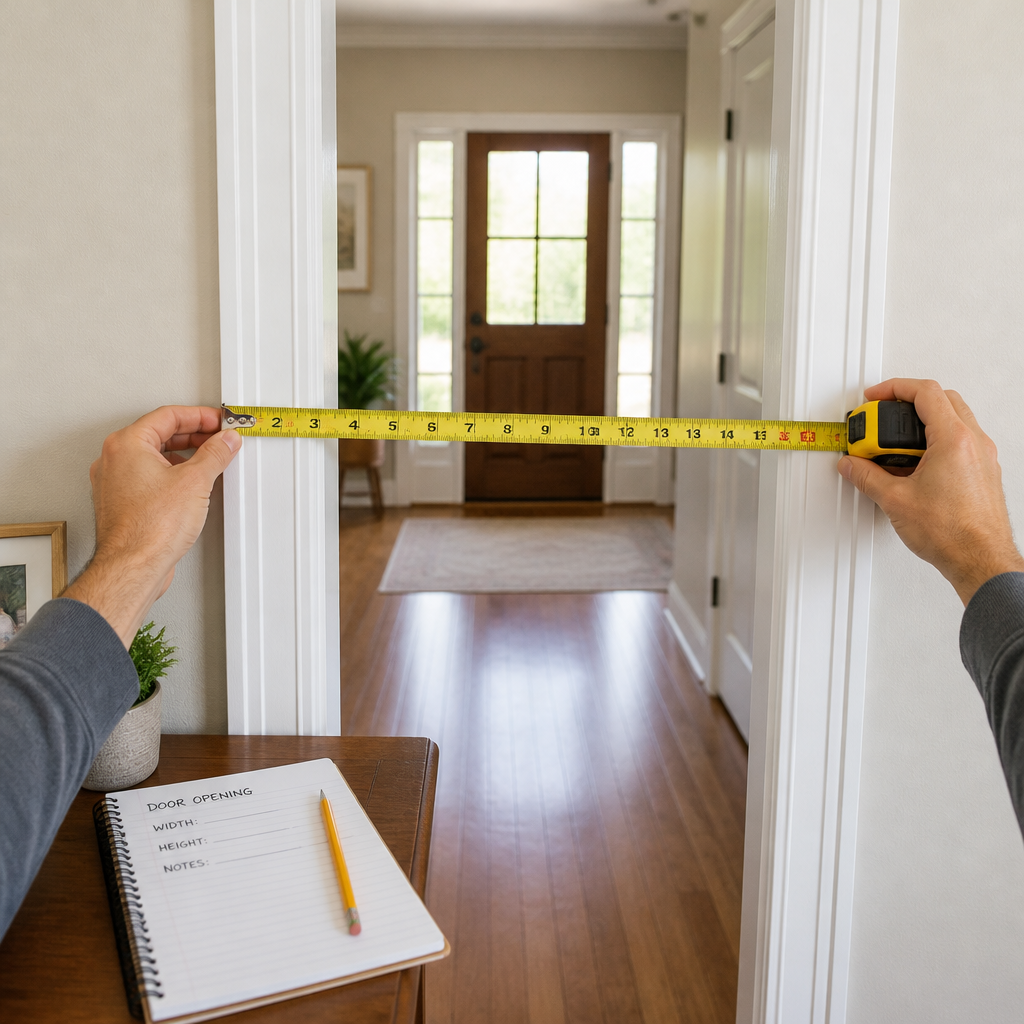
A loose or overstretched screen door will fail quickly. Accurate measurements ensure a taut, secure barrier.
Measuring Inner vs. Outer Door Frames
- Inner Frame (Opening Size): Measure the clear width and height between the inside edges of the door frame where you actually walk through.
- Outer Frame (Mounting Surface): Measure the flat face of the door frame trim. Adhesive hook-and-loop fasteners generally require at least 1 inch (2.5 cm) of flat trim width on both sides and top.
Accounting for Doorway Trim and Clearance
Always order a screen size that covers the inner opening plus the width of the adhesive tape. If your inner opening is 34" x 80", choose a pet screen measuring at least 36" x 82" so the adhesive mounts firmly onto the solid frame, not the air gap.
Step-by-Step Installation and Care Tips
Follow these best practices to ensure your screen remains firmly attached and lasts for years.
How to Install Adhesive Hook & Loop Straps Correctly
- Clean the Trim: Wipe the door jamb with rubbing alcohol to remove grease and dust. Let it dry completely.
- Attach Loop Tape to the Screen: Lay the pet screen flat on the floor and press the adhesive strip firmly along the top and sides of the mesh border.
- Mount from the Top Down: Peel the protective backing from the top strip and press it firmly to the top door header. Ensure it is straight.
- Secure the Sides: Peel the side backings gradually, pulling the screen slightly taut (not overstretched) as you press downward onto the frame.
- Reinforce with Pushpins: If installing on wooden door jambs, use the included thumbtacks along the outer perimeter for extra reinforcement against heavy pet impacts.
Cleaning and Maintaining Heavy-Duty Mesh
Vacuum loose hair and dust using a soft brush attachment. For muddy paw prints, wash the mesh gently using mild dish soap, warm water, and a microfiber cloth. Avoid harsh solvents, which can degrade the vinyl coating.
Helping Your Pet Adjust to the New Barrier
Some pets may not notice the mesh and run directly into it. Place a visible sticker, strip of painter's tape, or small hanging ribbon at your pet's eye level for the first week until they learn the barrier is there.
Frequently Asked Questions About Pet Screen Doors
Can cats climb a heavy-duty pet screen door?
Yes, cats may attempt to climb it. High-density vinyl-coated mesh is engineered to handle claws without unraveling, but it is best to discourage climbing using redirection or scratching posts nearby.
Will a pet screen door block sunlight or reduce airflow?
Pet screens use slightly thicker fibers than standard mesh, which reduces light transmission by roughly 10% to 15%. However, airflow remains excellent, and visibility into your yard or hallway is well preserved.
Can I install a pet screen door on a sliding glass door?
Yes. You can attach magnetic or zippered mesh versions directly to the stationary frame surrounding sliding patio doors, or purchase a rigid aluminum sliding insert that fits into the slider track.