
Magnetic Dog Screen Door: Hands-Free Entry for Patios and Sliders
Pet owners understand the constant cycle of opening and closing sliding glass doors or patio screens to let pets in and out. A dog screen door equipped with a magnetic closure provides an ideal, hands-free solution. By retrofitting directly into your existing screen mesh, these dedicated pet portals give your four-legged companions independence while keeping unwanted insects outside and preserving refreshing airflow.
Understanding Magnetic Dog Screen Doors: How Hands-Free Entry Works
Traditional pet doors often require cutting into exterior wooden walls or replacing solid glass panels. In contrast, a magnetic pet screen door integrates directly into existing mesh panels, operating on a simple yet effective swinging and sealing mechanism.
Seamless Access for Patios, Sliders, and Screened Porches
A dog screen door mounts low on sliding patio screen frames, pool enclosures, or screened-in porches. Because it swings freely in both directions, your pet can push through without assistance. As soon as the animal passes, weighted gravity hinges and embedded magnetic strips pull the flap back to its resting position.
How Magnetic Flaps Seal Out Insects and Maintain Airflow
The primary concern when giving pets outdoor access during warm months is insect intrusion. Magnetic screen doors feature paired high-energy neodymium magnets embedded along the lower frame and flap rim. The moment the swinging flap aligns with the frame, the magnets snap together, creating a tight perimeter seal that stops mosquitoes, flies, and gnats from slipping inside.
Sizing Guide: Finding the Perfect Fit for Dogs and Multi-Pet Homes
Choosing the right size is critical to prevent joint strain in larger breeds and ensure ease of passage for smaller companions.
How to Measure Your Pet's Width and Clearance Accurately
- Chest Width: Measure the widest part of your pet's chest or hips, then add 1 to 2 inches of clearance.
- Shoulder Height: Measure from the floor to the top of the pet's withers (shoulders).
- Step-Over Rise: Measure the distance from the floor to the pet’s belly. The bottom edge of the pet door frame should sit roughly 1 to 2 inches below this height so your pet does not have to jump or crawl.
Small vs. Large Door Dimensions: Balancing Needs for Dogs and Cats
| Door Size | Typical Flap Dimensions | Recommended Pet Weight | Ideal Pet Breeds |
|---|---|---|---|
| Small | 8" x 10" | Up to 15 lbs | Cats, Chihuahuas, Pomeranians |
| Medium | 12" x 14" | 15 – 40 lbs | French Bulldogs, Beagles, Cocker Spaniels |
| Large | 14" x 16"+ | 40 – 90+ lbs | Labradors, Golden Retrievers, German Shepherds |
Summary: When outfitting a home with both a large dog and a cat, choose a size accommodating the larger pet, but verify that the magnetic pull is light enough for the cat to open.
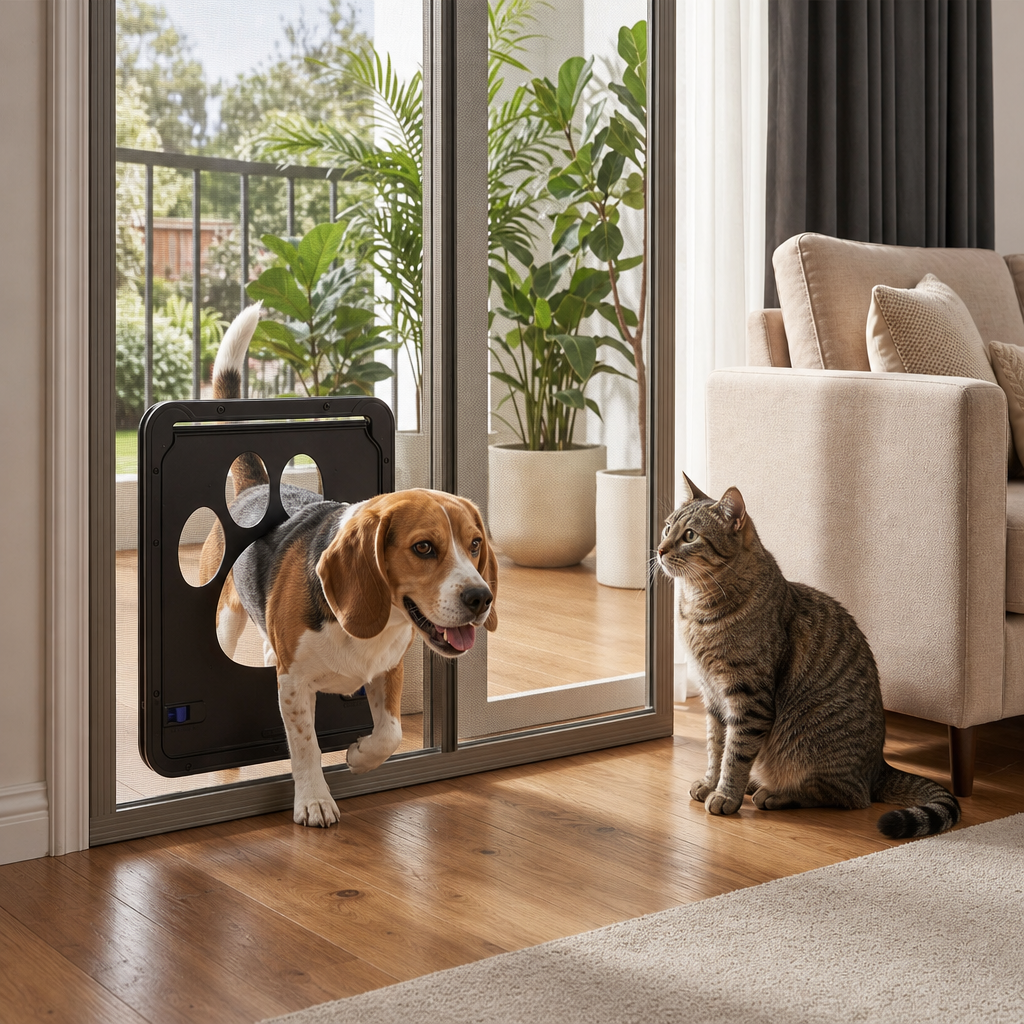
Can Cats Use a Dog Screen Door? Multi-Pet Compatibility
Many pet households house both felines and canines. While a medium-to-large dog screen door offers ample clearance, feline usability depends on flap tension and security needs.
Magnetic Flap Resistance: Can Lightweight Cats Push Through?
High-tension magnets designed for heavy winds may resist the nudge of an 8-pound cat. If you have a multi-pet household, opt for flaps that utilize lightweight plastic-core frames or lower-strength magnetic alignment pins. Alternatively, placing electrical tape over one magnet reduces tension, allowing cats to push through comfortably.
Magnetic Seals vs. Microchip Selective Entry
- Magnetic Seals: Open for any animal applying pressure. Economical and simple, but they cannot prevent neighborhood animals from entering if the main patio glass door remains open.
- Microchip Doors: Electronic units that scan an RFID collar or implanted chip, opening only for authorized pets. These are rarely fitted to flexible screen mesh and are typically reserved for solid door inserts.
Essential Features of High-Quality Pet Screen Doors
Investing in quality materials ensures the dog screen door survives years of vigorous paws and claws.
Durable ABS Plastic Frames and Claw-Resistant Mesh
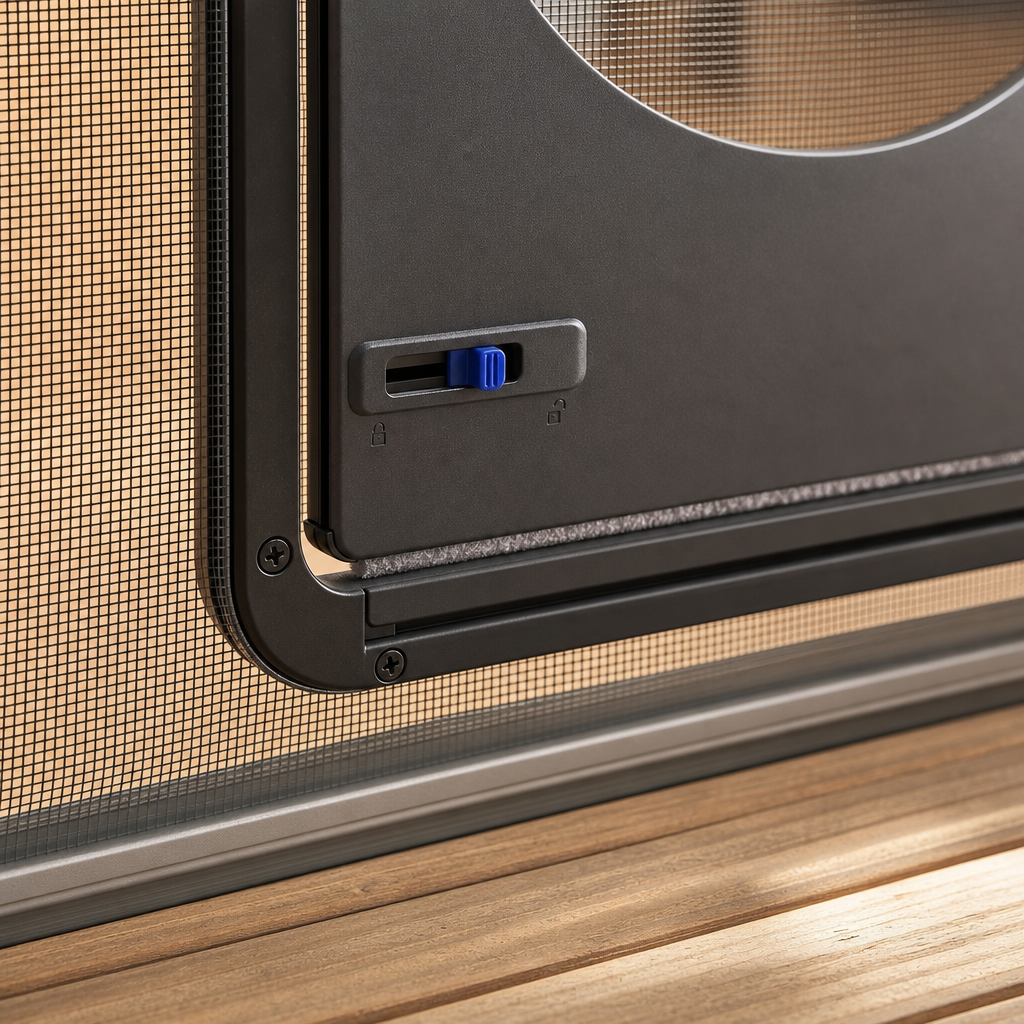
Standard fiberglass screens tear easily under pet paws. Premium pet doors feature heavy-duty ABS thermoplastic frames fastened with locking screws, sandwiching heavy pet-resistant polyester or vinyl-coated mesh that withstands scratching and high-speed impacts.
Built-In Slide Locks for Nighttime Security and Travel
Reliable models feature sliding tabs or snap-on locking panels. These locks stabilize the flap overnight, prevent entry during storms, or keep pets contained when patio barriers are unsupervised.
Replaceable Flap Systems for Long-Term Maintenance
Sunlight and heavy use can degrade plastic flaps over time. Look for doors offering modular flap replacements so you can refresh the hinge or vinyl without replacing the entire screen panel.
Installation and Compatibility: Sliding Doors, Porches, and Rental Homes
Installing a pet screen door is typically a simple, non-destructive DIY project that requires only a utility knife and a screwdriver.
Step-by-Step DIY Installation on Existing Screen Mesh
- Positioning: Lay the screen flat (or work directly on the hanging door). Position the outer frame in a bottom corner, keeping the frame 1–2 inches off the ground.
- Snapping the Frames: Align the front and back frames on either side of the screen mesh, snapping or screwing the perimeter pins through the screen.
- Trimming the Opening: Use a sharp utility knife to slice along the inner perimeter of the newly secured frame, removing the internal mesh rectangle.
- Flap Attachment: Snap the swinging flap onto the upper hinge clips and verify that the magnetic alignment seals cleanly.
Renter-Friendly Advantages: Modifying Screens Without Permanent Damage
Unlike solid wood or glass cutting, standard replacement screen mesh costs less than $15 a roll. Renters can install a pet door into an existing screen frame and simply respline a fresh sheet of mesh when moving out, fully recovering security deposits.
How to Train Dogs and Cats to Use a Magnetic Screen Door
Never force a pet through the door, as sudden flap snaps can create fear associations.
The Prop-and-Pass Method: Overcoming Flap Hesitation
- Day 1–2: Tape the flap completely open. Encourage your pet to walk through the empty frame using high-value treats.
- Day 3–4: Lower the flap halfway, letting it lightly brush against their back as they pass.
- Day 5: Let the flap close fully. Place a treat on the opposite side and gently push the flap slightly forward so your pet understands a simple nose nudge swings it wide.
Reinforcement Strategies for Independent Pet Access
Celebrate independent breakthroughs with verbal praise or clicker cues. Most dogs master the magnetic resistance within 48 to 72 hours.
Pre-Purchase Checklist for Magnetic Pet Screen Doors
Before ordering, run through this quick checklist:
- [ ] Measured pet's chest width and shoulder height (accounting for growth if still a puppy).
- [ ] Confirmed existing patio screen track operates smoothly without catching.
- [ ] Verified magnetic tension suits the smallest animal in your household.
- [ ] Selected a model made of UV-stabilized ABS plastic to avoid sun-bleaching and brittleness.
- [ ] Checked that replacement flaps and hinges are readily available.
Equipping your home with the right magnetic dog screen door restores easy outdoor access for your pets while keeping bugs out and your home naturally ventilated.