
Silicone Basket Muzzle Guide: Balancing Safety, Comfort, and Scavenging Prevention
Modern canine gear prioritizes both public safety and animal welfare. Among modern training and safety solutions, the silicone basket muzzle has emerged as an essential tool for responsible dog owners. Unlike restrictive cloth wraps, modern basket designs allow dogs to pant, hydrate, and accept training rewards while preventing unwanted bites or hazardous foraging.
This guide breaks down the mechanics, welfare benefits, and sizing guidelines for silicone basket muzzles featuring movable covers, helping you choose the right fit for your companion's needs.
Understanding the Silicone Basket Muzzle Design
A functional basket muzzle creates a protective barrier around the jaw without clamping the mouth shut. Recent innovations have refined this concept, blending durable materials with user-friendly mechanics.
Flexible Silicone Construction vs. Rigid Wire Cages
Historically, dog owners had to choose between stiff wire cages and soft fabric wraps:
- Traditional Wire Muzzles: Offer excellent airflow and bite security, but their rigid metal structure can cause painful facial bruising during sudden lunges or active play.
- Fabric/Mesh Sleeves: Clamp the jaw tight, preventing essential heat regulation through panting, making them unsuitable for prolonged walks.
- Flexible Silicone: Yields slightly upon contact, contouring softly against a dog's snout. It absorbs impacts without sacrificing structural bite resistance, offering durability in sub-zero winters or hot summers without cracking.
How the Movable Front Cover Helps Prevent Scavenging
Many dogs suffer from compulsive scavenging (pica) or ingest street waste such as chicken bones, discarded trash, or toxic bait. Standard basket designs feature open slats that allow determined dogs to inhale small morsels.
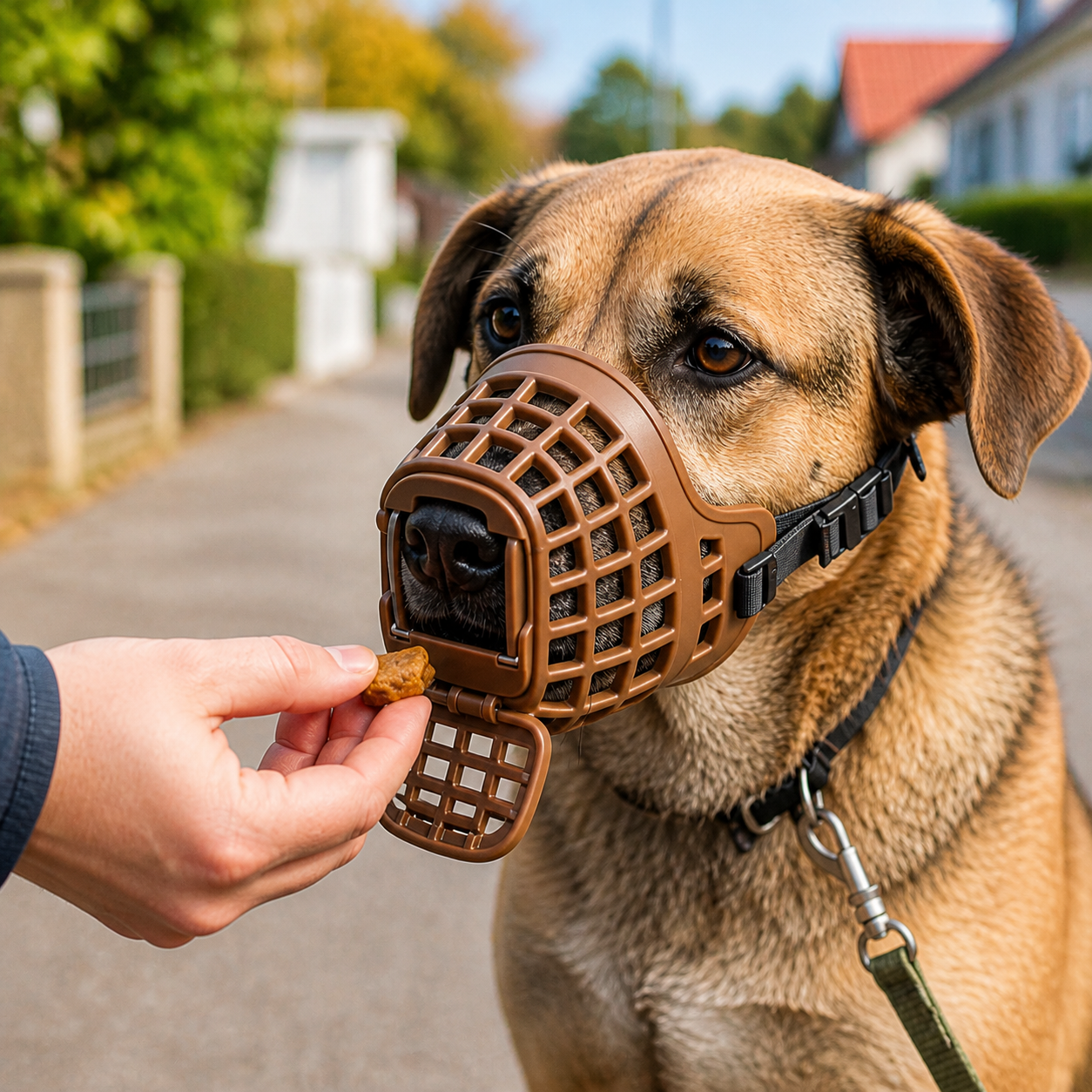
Muzzles equipped with a movable or detachable front panel solve this problem. When closed during street walks, the guard blocks access to floor debris. When open during controlled training sessions or quiet downtime, it offers seamless access for high-value treats.
Key Features That Support Daily Dog Welfare
A humane muzzle should never compromise a dog's natural physiology or emotional well-being. Modern silicone designs focus heavily on everyday comfort and physical safety.
Enabling Drinking and Reward Feeding While Secured
Behavioral modification relies heavily on positive reinforcement. With an adjustable basket design:
- Owners can slip soft treats through the lower grid or open front hatch.
- Dogs can submerge their lower jaw into a water bowl to drink unhindered during outdoor hikes.
- The design eliminates the frustration often caused by restrictive gear, facilitating smoother desensitization.
Panting Space and Proper Airflow for Outdoor Comfort
Dogs do not sweat through their skin; they regulate body temperature almost entirely via panting. A properly proportioned basket provides sufficient vertical "pant room"—space beneath the jaw allowing the mouth to open fully. The open-grid matrix promotes continuous cross-ventilation, preventing heat exhaustion during warm-weather exercise.
Easy-to-Clean Materials for Routine Maintenance
Daily outdoor use exposes muzzles to saliva, soil, and organic matter. Unlike porous leather or woven nylon that harbor bacteria and develop odors, non-porous silicone can be washed with warm water and pet-safe soap or sanitized in minutes.
Feature
Flexible Silicone Basket
Wire Cage Muzzle
Fabric Mesh Wrap
Panting Ability
Full vertical pant room
Full vertical pant room
Severely restricted
Impact Softness
High (pliable)
Low (hard metal)
Moderate
Scavenging Protection
High (with movable cover)
Low to Medium
High (closed mouth)
Hygiene & Cleaning
Dishwasher/Soap safe
Rust-sensitive
Holds moisture & odors
Summary: Silicone basket muzzles deliver an optimal balance of bite prevention, impact absorption, and ventilation while keeping hygiene simple.
When to Use a Basket Muzzle with a Movable Cover
Muzzles serve varied functional purposes depending on environment, temperament, and medical requirements.
Managing Street Scavenging During Everyday Walks
Urban and suburban sidewalks are full of dangerous hazards, from discarded bones to chemical rodenticides. A silicone basket with a closed front guard prevents opportunistic eating, sparing owners costly veterinary emergency visits and gastrointestinal foreign-body surgeries.
Ensuring Safety During Vet Appointments and Grooming Sessions
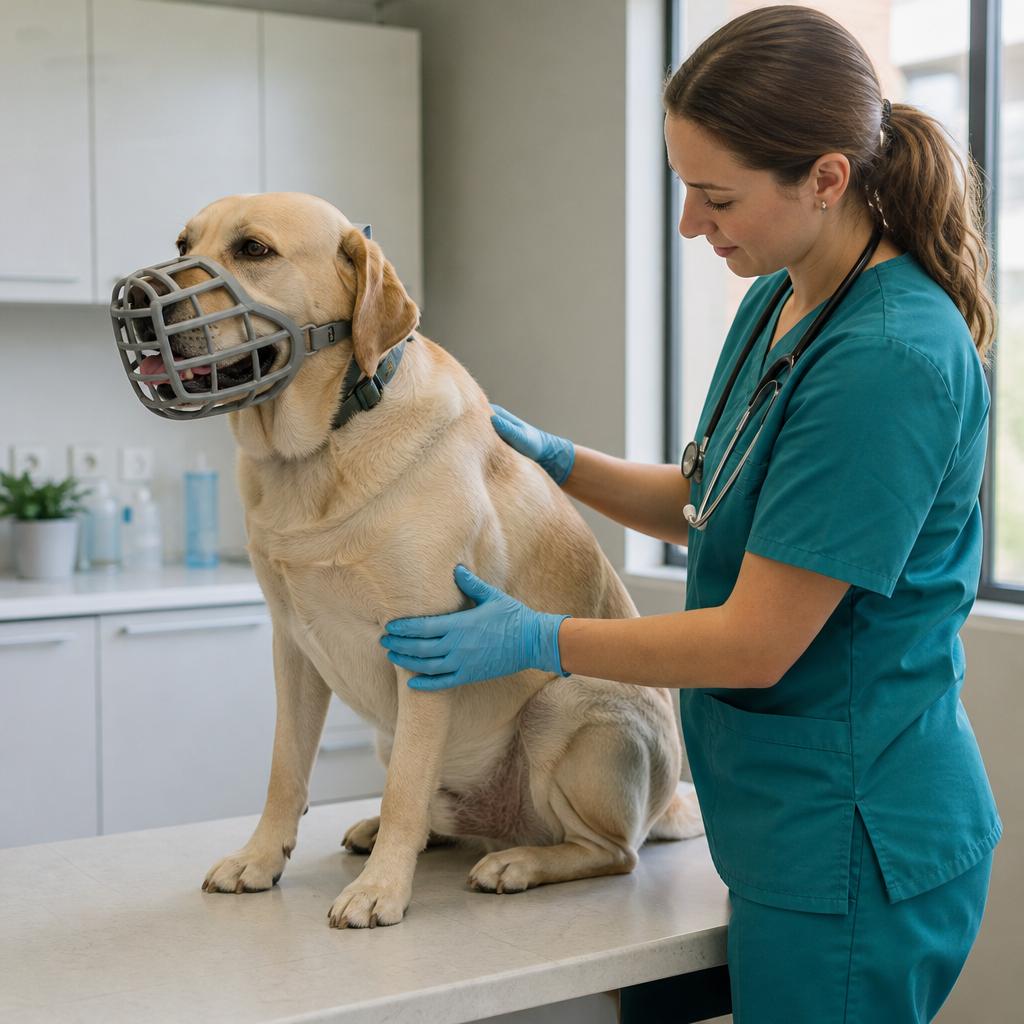
Even gentle dogs can snap reactively when experiencing acute pain or high stress on the examination table. Basket muzzles keep veterinarians and groomers safe while keeping the dog comfortable enough to breathe deeply and take reassuring treats throughout the procedure.
Sizing and Fit Checklist Before You Buy
A poorly fitted muzzle will cause chafing or slip off entirely. Accurate measurements ensure effective, irritation-free wear.
Measuring Snout Circumference and Length Accurately
- Snout Length: Measure along the top ridge of the nose, beginning approximately 0.5 inches (1.3 cm) below the eyes down to the tip of the nose.
- Snout Circumference: Measure around the widest point of the muzzle while the mouth is closed, then add 1.5 to 2.5 inches (3.8–6.4 cm) to your final measurement to guarantee adequate panting clearance.
Adjusting Head and Neck Straps for a Secure Hold
- Overhead/Forehead Strap: Prevents the dog from pawing the basket downward off the nose.
- Neck Strap: Should fit snugly behind the ears. Check that you can fit two flat fingers underneath the strap—neither pinching the coat nor resting loosely.
- Collar Attachment Loop: Thread your dog's regular everyday collar through the base loop for failsafe security.
Best Practices for Safe and Humane Muzzle Use
A muzzle should never feel like a punishment. Patient desensitization creates a neutral or joyful response whenever the gear appears.
Introducing the Muzzle Gradually with Positive Associations
- Exploration: Place the muzzle on the floor alongside high-value treats; let your dog sniff it voluntarily.
- Targeting: Hold a treat at the far end of the basket, encouraging your dog to insert their nose independently.
- Fastening: Fasten the buckle for 2–3 seconds while offering continuous praise, then remove it immediately.
- Duration Building: Gradually increase wear time indoors before heading out on regular walks.
Routine Checks for Proper Clearance and Wear Comfort
- Inspect the skin on the bridge of the nose and behind the ears for friction spots or redness.
- Confirm the front tip of the silicone frame does not push against the sensitive leather of the nose.
- Ensure the bottom basket leaves clear clearance when the mouth opens during exercise.
Selecting the Right Size for Your Dog
Manufacturers categorize sizes by numbered tiers based on snout dimensions:
- Size 1–2 (Small/Toy Breeds): Tailored for Jack Russells, Dachshunds, and Beagles with shorter snout circumferences.
- Size 3–4 (Medium Breeds): Ideal for Border Collies, Spaniels, and Australian Shepherds.
- Size 5–6 (Large/Giant Breeds): Proportioned for German Shepherds, Labradors, Golden Retrievers, and Rottweilers needing substantial pant room.
Always prioritize snout circumference over weight recommendations. Choosing a model that allows your dog to pant naturally turns safety gear into a comfortable, life-saving staple for everyday adventures.